
What Does a Dental Hygienist Do During Your Visit?
Most people know they’re supposed to see a dental hygienist twice a year. Fewer people know what’s actually happening during that appointment beyond the scraping sound and the minty finish. And honestly, that knowledge gap is part of why so many patients feel anxious before they even sit down.
Here’s the thing: your hygienist is doing a lot more than cleaning your teeth. They’re conducting a detailed clinical assessment, catching problems your toothbrush never could, and setting up your mouth for long-term health. Once you understand what’s happening and why, it changes the way you experience the whole visit.
The Hygienist’s Role: More Than a Polish
Before the cleaning even starts, your hygienist reviews your health history. Medications, medical conditions, and changes since your last visit all matter here. Certain medications cause dry mouth, which increases the risk of cavities. Others affect bleeding. Systemic conditions like diabetes are directly linked to gum disease. Your hygienist takes note of it all.
At Dennis Dental Care in Mogadore, OH, this intake process is part of the team’s approach to cleaning and prevention. It’s a genuine assessment of where your oral health stands right now.
After reviewing your records, your hygienist performs an oral cancer screening. This is typically done by feeling the lymph nodes along your neck and jaw, and visually examining the soft tissues inside your mouth – your cheeks, tongue, palate, and floor of the mouth. According to the American Cancer Society, about 58,450 Americans are diagnosed with oral cavity or oropharyngeal cancer each year. Early detection makes a significant difference in outcomes, and this screening takes less than two minutes.

Periodontal Assessment: Reading the Numbers
You’ve probably heard your hygienist call out a series of numbers while probing around your gumline. Those numbers represent pocket depths – the space between your gum tissue and the base of each tooth. Healthy gum pockets measure between 1 and 3 millimeters. Numbers in the 4–5mm range suggest early gum disease, while 6mm and above can indicate a more serious condition called periodontitis.
Periodontal disease is the leading cause of tooth loss in adults, and research published in the Journal of Periodontology has also linked untreated gum disease to increased risk of heart disease, diabetes complications, and preterm birth. Your hygienist’s charting helps your care team catch these problems before they become serious.
If you have any bleeding during probing, that’s also noted. Healthy gums shouldn’t bleed with routine probing, so any bleeding is a signal worth paying attention to.
The Cleaning – What’s Happening and Why
Once the assessment is complete, the clinical cleaning begins. Here’s what takes place:
- Scaling: Using hand instruments called scalers and curettes, your hygienist removes calculus (tartar) from above and below the gumline. Calculus is hardened plaque that can’t be removed by brushing – it can only come off with dental instruments. Leaving it in place allows bacteria to thrive, leading to gum inflammation and eventually bone loss.
- Ultrasonic scaling: Many practices also use an ultrasonic scaler, which uses vibration and a water stream to break up calculus deposits, particularly in deeper pockets. It’s efficient and generally comfortable.
- Polishing: After scaling, your hygienist uses a prophy cup and polishing paste to clean the surfaces of your teeth. This removes surface stains and the soft biofilm that accumulates on enamel. It’s satisfying, but it’s also functional; smoother surfaces are harder for bacteria to grip.
- Flossing: Your hygienist flosses between every tooth, both to clean the contacts and to check for any areas that catch or bleed. If you’re not flossing at home, this step will quickly reveal that.
This thorough routine is exactly the kind of consistent cleaning and prevention care that helps avoid costly, more complex treatment down the line.
Radiographs and What They Reveal
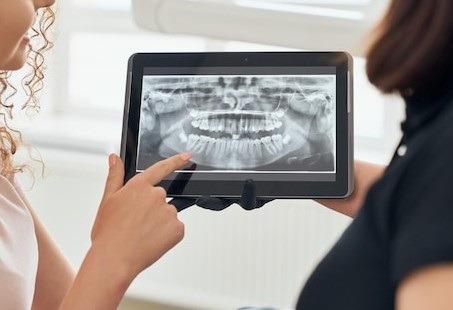
Depending on your history and risk level, your hygienist may take X-rays during your visit. Bitewing radiographs show what’s happening between your teeth and under the gumline – areas that are completely invisible during a visual exam. They’re how your team spots cavities in their earliest stages, bone changes from gum disease, and abnormalities that have no outward symptoms at all.
The American Dental Association recommends that X-ray frequency be based on the patient’s risk rather than a one-size-fits-all schedule. Your hygienist uses your history to decide what’s clinically appropriate.
Personalized Home Care Guidance
Before you leave, your hygienist will talk through what they found and give you specific guidance for at-home care. This isn’t a generic speech about brushing twice a day. It’s targeted advice based on what they actually observed during your appointment.
They might recommend:
- A different brushing technique if you’re brushing too hard and causing gum recession
- An electric toothbrush if your manual technique isn’t removing plaque effectively
- Specific floss types or an interdental brush if you have tight contacts or spacing that’s hard to clean
- A prescription fluoride toothpaste if you have an elevated cavity risk
- A water flosser if traditional floss is difficult to use due to dexterity issues or orthodontic appliances
This is where you get the most value from the appointment beyond the chair time. The hygienist has just spent 45–60 minutes examining your mouth – their recommendations are based on real findings, not guesswork.

Why Keeping These Appointments Matters
Skipping your hygiene visits might seem low-risk in the short term. But plaque hardens into calculus within 24–72 hours, and once it calcifies, no amount of home brushing will remove it. Over months and years, bacterial buildup leads to gum inflammation, bone loss, and, eventually, teeth that can’t be saved.
The two-visit-a-year recommendation isn’t arbitrary. It’s based on the rate at which calculus accumulates for most patients. Higher-risk patients with a history of gum disease, dry mouth, or certain medical conditions often benefit from visits every three to four months.
The team at Dennis Dental Care in Mogadore, OH, is accepting new patients. Book your appointment today and give your mouth the attention it deserves.
People Also Ask
Is a dental hygiene appointment the same as seeing the dentist?
Not exactly. Your hygienist handles the clinical cleaning, assessment, and screenings during your visit. The dentist then reviews your hygienist’s findings and conducts their own exam, often during the same appointment. Both play different but equally important roles in your care.
How long does a dental hygiene appointment take?
For a routine adult prophylaxis, most appointments run between 45 and 60 minutes. If you haven’t been seen in a while, or if you have periodontal disease requiring a deeper cleaning, the appointment may take longer or be split into multiple visits.
What’s the difference between a regular cleaning and a deep cleaning?
Regular prophylaxis cleanses the areas above and just below the gumline for patients with healthy or mildly inflamed gums. A deep cleaning (scaling and root planing) goes further below the gumline to remove calculus from the root surfaces of teeth, and is used to treat active gum disease.
Can a dental hygienist tell if I have cavities?
Hygienists can identify areas of concern during their assessment, but the dentist makes the official diagnosis of cavities. Radiographs taken during your hygiene visit are the most reliable way to detect cavities that aren’t yet visible.
What should I do if my gums bleed every time I get a cleaning?
Some patients normalize gum bleeding, but it’s a sign of inflammation from plaque buildup along the gumline. Consistent brushing, flossing, and keeping your hygiene appointments will typically reduce or eliminate bleeding over time. If it persists, your hygienist may recommend a more frequent visit schedule.